The Paradox of the Red City
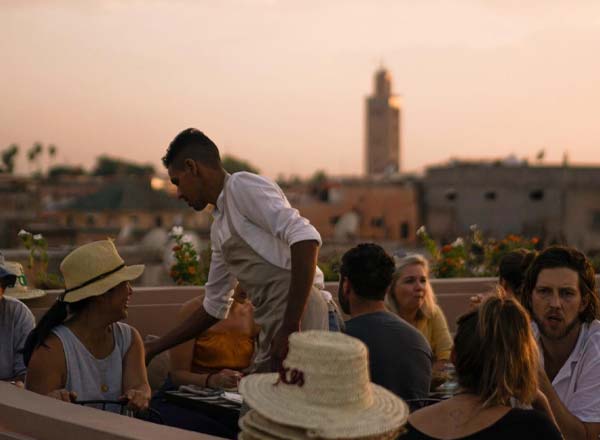
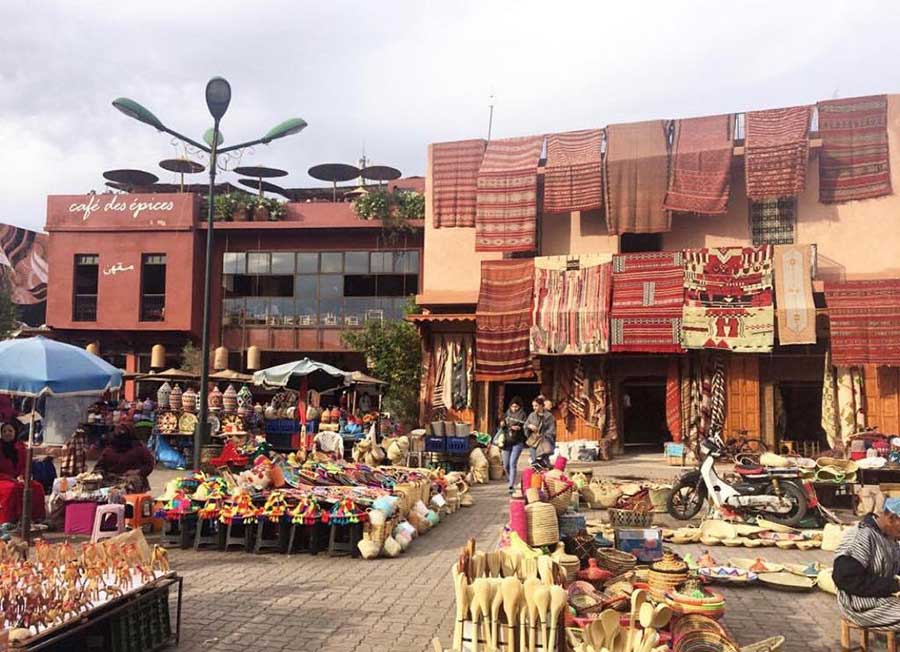
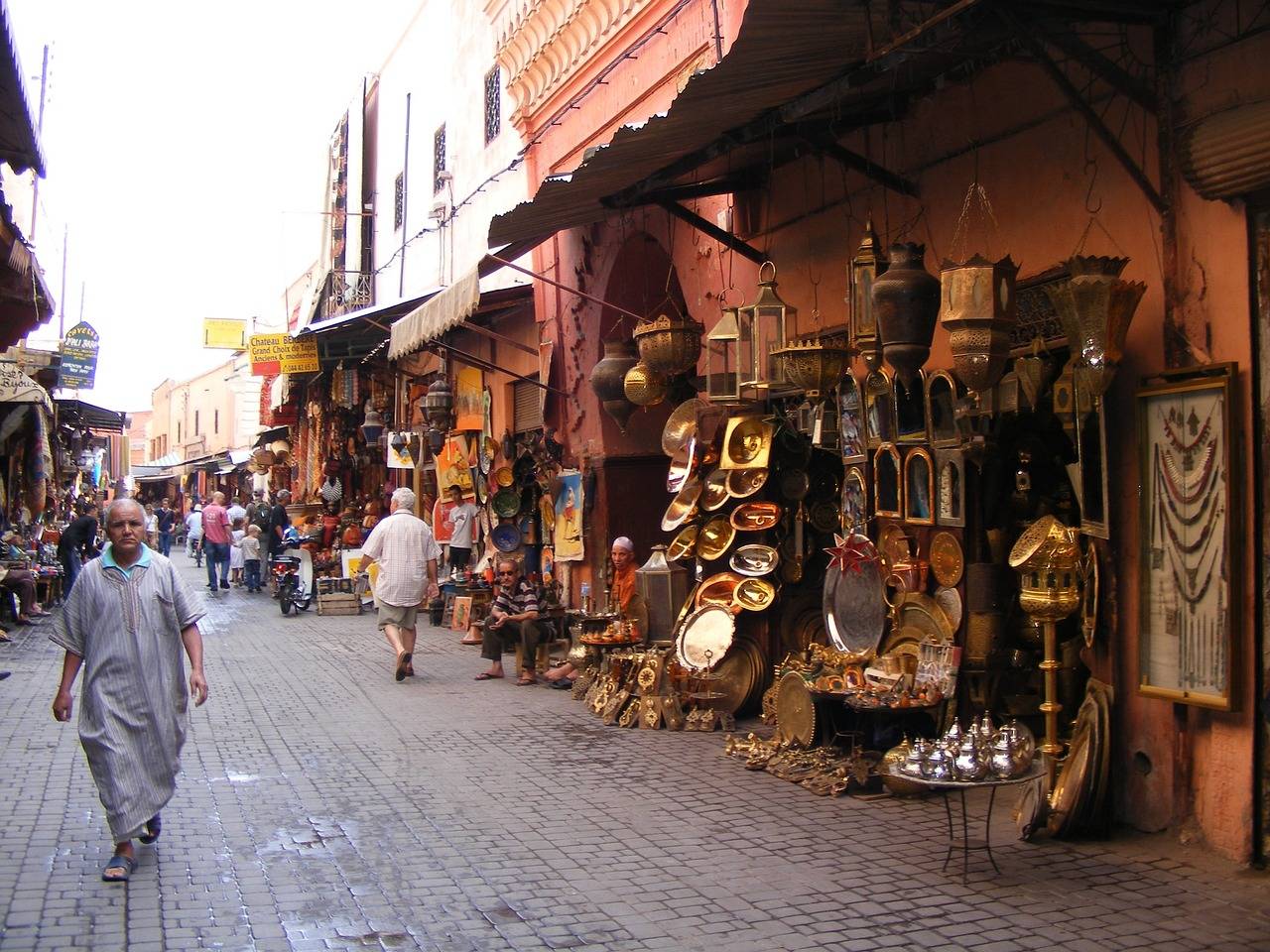
Marrakech is a city that lives at a higher frequency. For the uninitiated, the Medina—a UNESCO World Heritage site—is a beautiful, high-octane assault on the human nervous system. Between the olfactory explosion of the spice markets, the rhythmic hammering of the coppersmiths, and the visual kaleidoscope of the souks, the brain remains in a constant state of “high alert.”
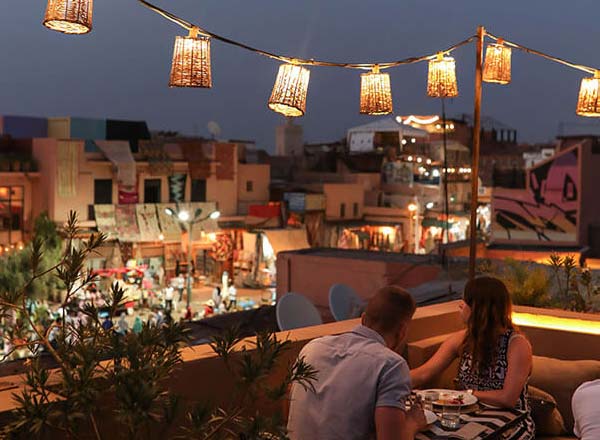
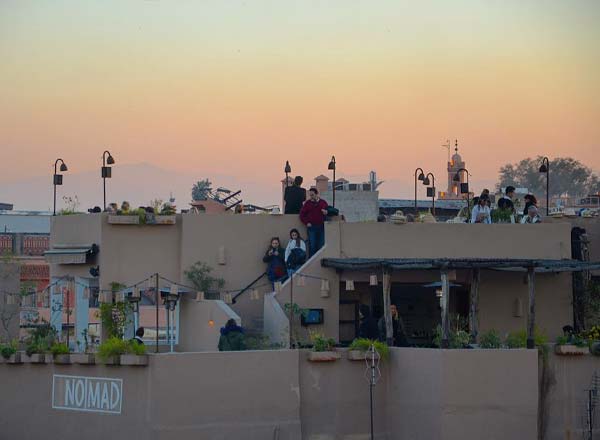
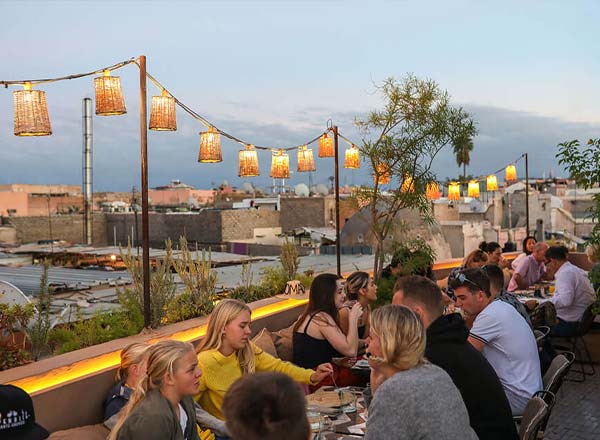
This is where the concept of the “San sanctuary effect” comes into play. To truly appreciate Marrakech, one must understand the rhythm of tension and release. Nomad Marrakech was not designed merely as a dining room; it was architecturally and sensorially engineered to be the “release” in the city’s complex narrative.
The Neuro-Aesthetics of the Souk vs. the Rooftop
Neuro-aesthetics is the study of how our brains respond to the beauty and structure of our environment. The Medina is a “fractal” environment—dense, repetitive, and unpredictable. While this is culturally enriching, it eventually leads to sensory fatigue.
When a guest enters Nomad from the Rahba Kedima (the Spice Square), they undergo a physical transition.
- The Narrow Path: The entrance is a deliberate “compression” of space, typical of Moroccan architecture.
- The Vertical Release: As you climb the stairs, the ceiling heights open up, and the color palette shifts from the “hot” oranges and reds of the market to “cool” tones of desert sand, bone, and charcoal.
- The Horizon Line: Psychologically, humans feel safest when they can see the horizon. By providing an unobstructed view of the Atlas Mountains, Nomad triggers a parasympathetic nervous system response—literally telling your brain it is safe to relax.
Designing for Silence in a City of Sound
Silence in the Medina is the ultimate luxury. However, absolute silence can feel sterile. Nomad utilizes “Acoustic Anchoring.” By being elevated above the street level, the sharp, percussive noises of the souk (motorcycles, shouting, metalwork) are filtered out, leaving only the “ambient hum” of the city. This white noise, combined with the soft clink of artisanal pottery and the rustle of the wind through the terrace umbrellas, creates a soundscape that facilitates deep conversation. This is why Nomad has become the unofficial headquarters for the world’s creative elite—it is a place where the brain can finally process the inspiration gathered in the streets below.
The “Slow Food” Counter-Narrative
In 2026, the world is moving faster than ever, but at Nomad, the kitchen operates on a different clock. The menu is a rejection of the “Fast-Casual” culture that has begun to seep into Marrakech.
Every dish, from the slow-roasted lamb to the hand-pressed juices, is an invitation to practice Mindful Gastronomy. When you eat a meal that has been sourced from a farm 30 kilometers away and prepared using techniques that take hours, you are not just consuming calories; you are consuming time. This “time-rich” experience is what modern luxury travelers are searching for.