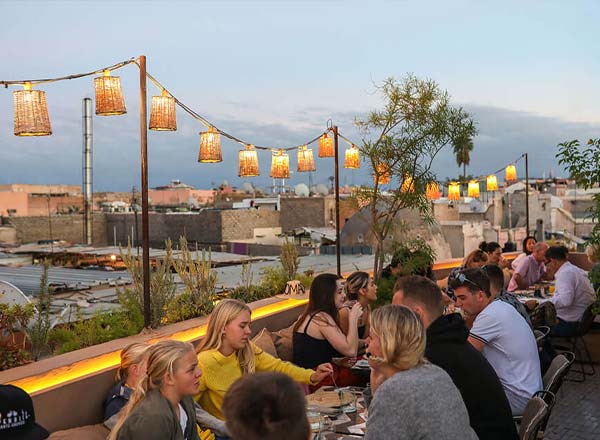
A Vertical Sanctuary in the Red City
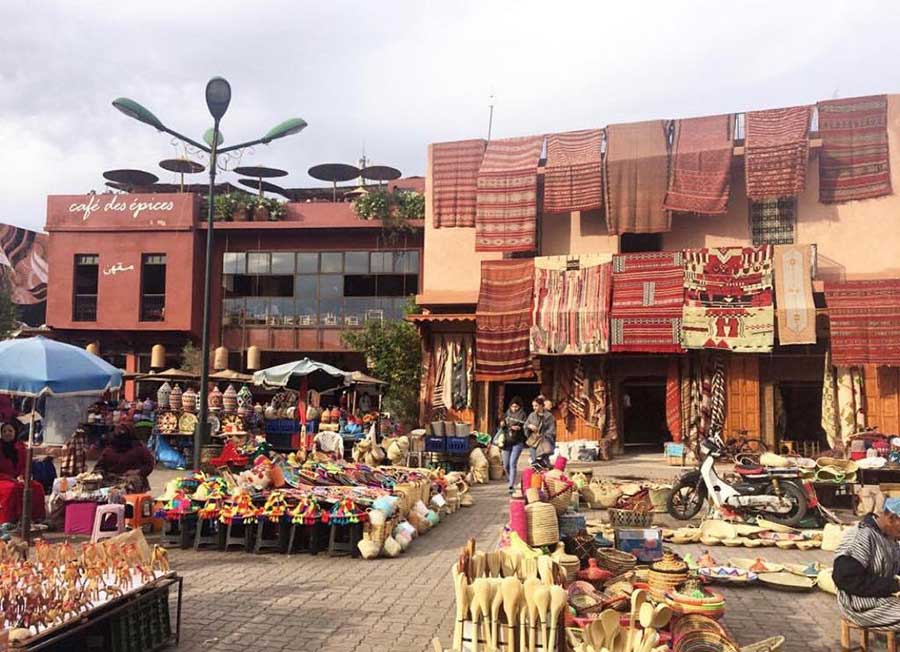
Marrakech is a city of horizontal mysteries—winding alleys, hidden riads, and sprawling souks. Yet, at the heart of the Medina lies Nomad Marrakech, a restaurant that chose to grow vertically, offering a new perspective on the ancient Rahba Kedima (Spice Square). To understand Nomad is to understand the dialogue between the old world and the new. It is not merely a place to eat; it is an architectural manifesto that proves heritage and minimalism can coexist.
The Soul of Rahba Kedima: From Slave Market to Spice Hub
Before the first plate of spiced calamari was ever served at Nomad, the ground beneath it breathed centuries of history. Rahba Kedima was once the city’s primary grain market and, more somberly, its slave market until the early 20th century.
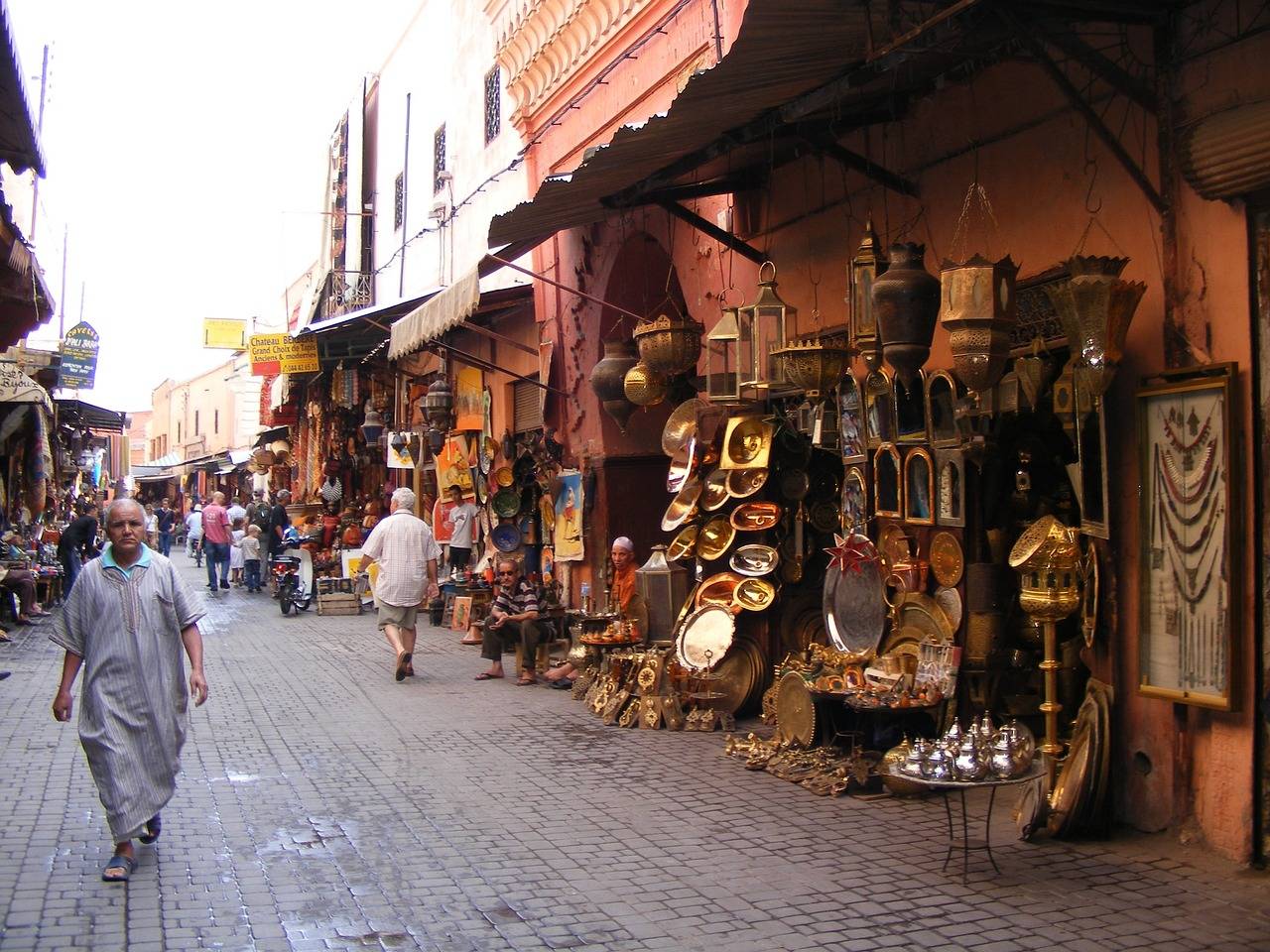
Today, the square is the “apothecary” of Marrakech. The air is thick with the scent of cumin, dried rosebuds, and smoldering incense. Nomad’s choice to settle here was a strategic embrace of this grit and glory. By repurposing an old merchant house, the restaurant didn’t just move into the Medina; it became its pulse.
The Design Language: “Nomadic Minimalism”
Walking into Nomad feels like stepping into a curated gallery. The design, spearheaded by the founders, departs from the heavy, ornate “Aladdin” aesthetic found in many traditional riads.
- The Palette: A sophisticated blend of bone-whites, desert-browns, and charcoal-grays. This neutrality allows the vibrant colors of the Spice Square below—the oranges of the spices and the blues of the carpets—to act as the restaurant’s natural artwork.
- The Materials: Every surface tells a story of Moroccan craftsmanship filtered through a modern lens. You’ll find Tadelakt (waterproof lime plaster) walls that are smooth to the touch, custom-made ironwork, and hand-woven straw hats that double as wall decor.
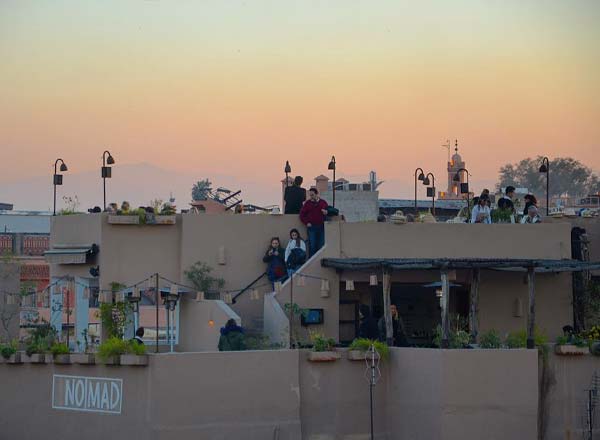
- The Layout: Nomad is a labyrinth of levels. Each mezzanine and terrace offers a different “frame” of the city. This verticality mimics the layers of Marrakech’s own history.
The Rooftop as a Cultural Observatory
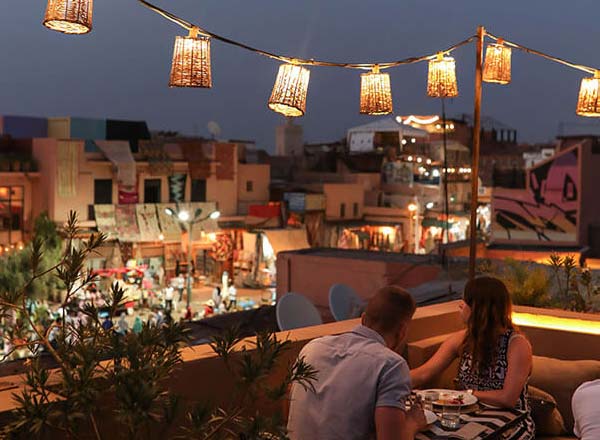
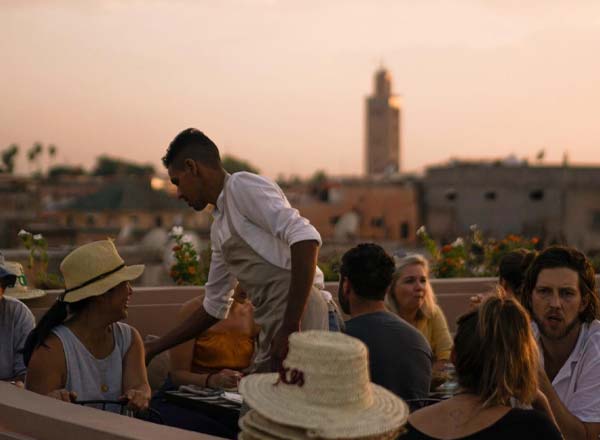
The crown jewel of Nomad is its multi-level rooftop. In 2026, “rooftop dining” is common, but Nomad offers something deeper: a Cultural Observatory.
From the top deck, you aren’t just looking at the Atlas Mountains; you are witnessing the “Call to Prayer” (Adhan) ripple across the rooftops. You see the storks nesting on the ramparts and the daily negotiations of the carpet sellers below. The architecture of the terrace is designed to be “open-source,” inviting the sounds and sights of the city in while providing a sophisticated barrier of comfort.
Why Design Matters for the Modern Traveler
Today’s traveler seeks “The New Nomad” lifestyle—a blend of digital connectivity and authentic grounding. Nomad’s aesthetic appeals to the Global Nomad. The lighting is designed for intimacy, the acoustics manage to dampen the souk’s roar without erasing it, and the furniture encourages long, contemplative stays.