Introduction: The Architecture of Metamorphosis
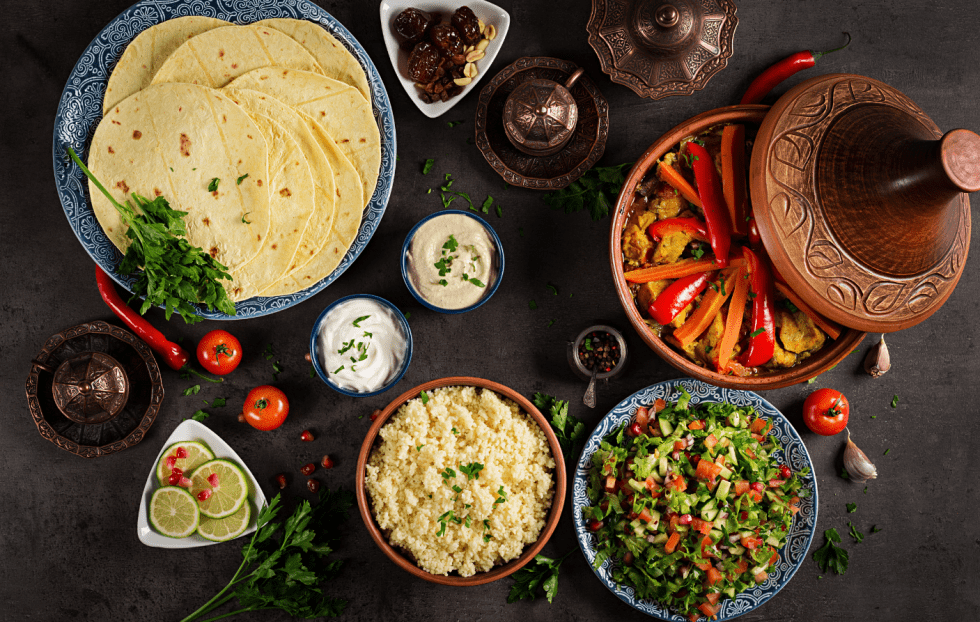
Marrakech is a city caught in a perpetual dialogue between its ancient past and its dynamic future. For centuries, the global perception of the Medina was frozen in an Orientalist postcard—heavy carpets, labyrinthine alleys, and a culinary narrative that rarely extended beyond the traditional, slow-cooked tagine. While these traditions are the vibrant heartbeat of the Red City, a cultural renaissance has quietly taken shape over the last decade, altering how the world perceives North African hospitality.
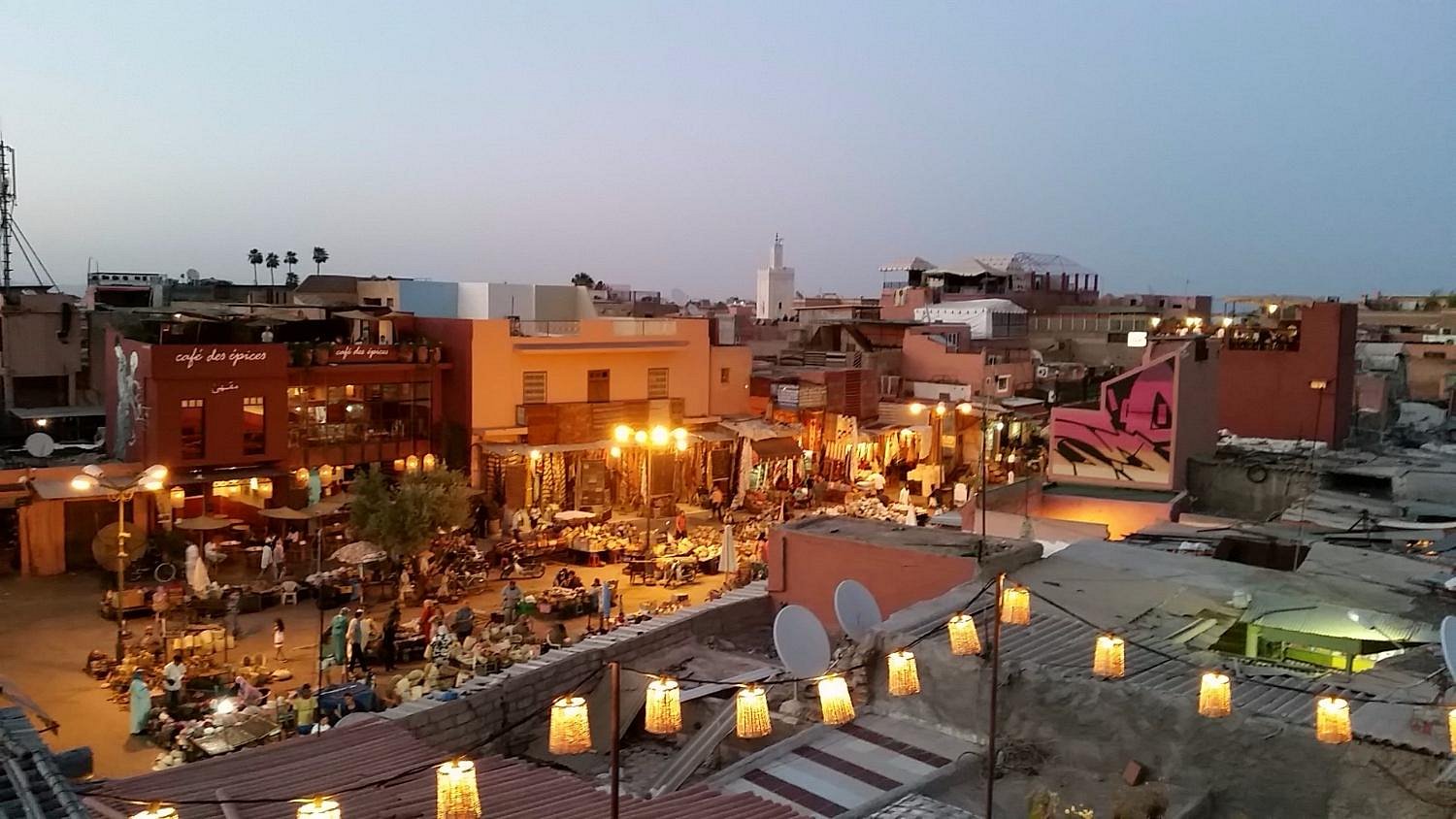
At the very epicentre of this transformation stands Nomad Marrakech. Located on the bustling Rahba Kedima (the Spice Square), Nomad did not merely open a restaurant; it engineered a new architectural, aesthetic, and cultural vocabulary for the Medina. This article explores how Nomad catalyzed a urban and culinary revolution, proving that honoring heritage does not require mimicking it.
Breaking the Mold: The Shift from “Exoticism” to “Contemporary Authenticity”
For decades, high-end dining and lifestyle spaces in Marrakech defaulted to heavy, ornate interiors—dark woods, intricate plasterwork, and a maximalist approach that often felt like a stage set rather than an authentic space.
Nomad shattered this paradigm by introducing Nomadic Minimalism.
- The Palette of the Desert: Instead of deep, oppressive hues, the interior design relies on bone-whites, natural terracotta, raw concrete, and charcoal grays. This neutral canvas allows the real artwork of Marrakech to take center stage: the brilliant oranges of the spices below, the indigo of the textiles, and the deep blue of the North African sky.
- The Rejection of Clichés: By stripping away the superficial clichés of luxury, Nomad forced a reckoning in the local hospitality market. It proved that international travelers and locals alike craved breathing room, clean lines, and a visual language that felt modern yet deeply rooted in Moroccan craftsmanship.
The Verticality of Calm: Escaping the Medina’s Sensory Overload
Urban psychologists often study the concept of “Cognitive Load”—the amount of mental processing power being used at any given time. The Marrakech Medina is a masterpiece of sensory richness, but for the modern visitor, it can induce intense sensory fatigue.
Nomad’s genius lies in its spatial philosophy: Vertical Decompression.
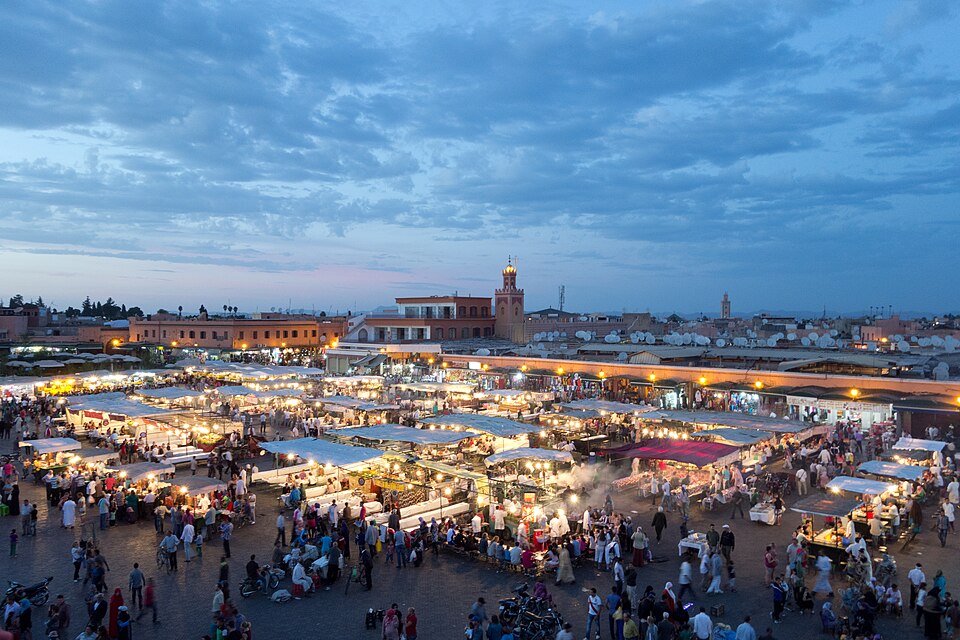
- The Compression and Release: Entering the building from the chaotic spice market mimics traditional Moroccan architectural design—a narrow, modest doorway that opens up as you ascend. As guests climb the multi-level staircases toward the rooftop, the noise of the souk fades into a manageable, ambient hum.
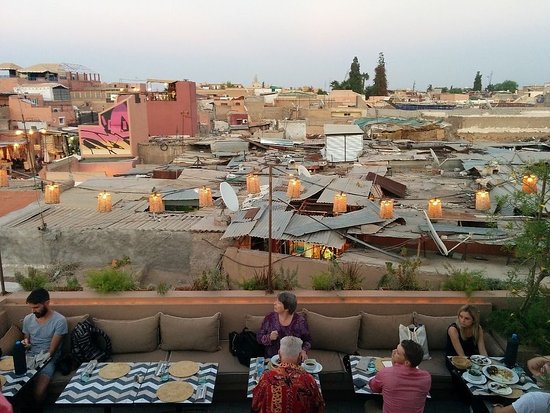
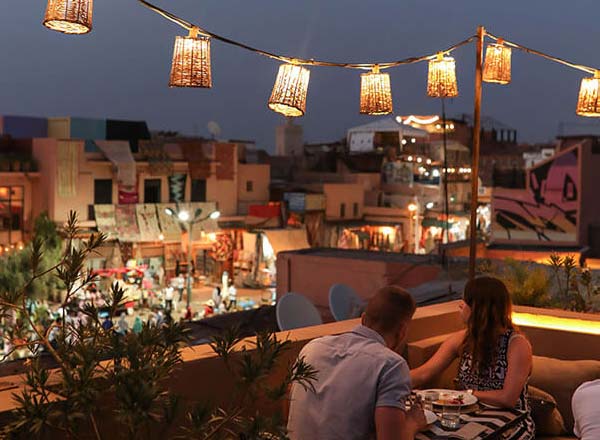
- The Horizon Line: Psychologically, human beings seek out horizons to regulate stress. By offering unobstructed views over the terracotta rooftops all the way to the snow-capped Atlas Mountains, Nomad provides a psychological “reset button.” You are simultaneously in the heart of the city and completely removed from its friction.
The “Nomad Effect” on Local Craftsmanship
The economic impact of a major cultural anchor like Nomad Marrakech extends far beyond its kitchen doors. Before Nomad’s arrival, the Rahba Kedima was primarily a transit point for tourists buying souvenirs. Today, it is a micro-hub of the contemporary Moroccan creative economy.
- Elevating the Artisan: The woven straw hats, custom ironwork, and earthenware pottery used throughout the restaurant are not imported from European design houses; they are commissioned directly from local artisans in the surrounding souks.
- Reverse Innovation: By pushing local craftsmen to meet rigorous, contemporary design standards, Nomad helped upgrade the entire artisanal ecosystem of the Medina. Today, the “Nomad Aesthetic” is studied and replicated globally, proving that design innovation can flow outward from North Africa rather than just inward from Europe.
Creating the Modern “Third Space”
Sociologists refer to the “Third Space” as an environment separate from home (the first space) and work (the second space) where community is forged. In a city like Marrakech, finding a third space that accommodates both the hyper-connected digital nomad and the contemplative traveler is rare.
Nomad successfully bridges this gap. Its terraces serve as an organic networking ground where documentary filmmakers, tech entrepreneurs, local artists, and fashion designers share adjacent tables. This cross-pollination of ideas has turned the restaurant into an unofficial clubhouse for the global creative class visiting North Africa.
Frequently Asked Questions (FAQ)
Q1: Where is Nomad Marrakech located?
A: Nomad Marrakech is located at 1 Derb Aarjane, right on the Rahba Kedima (the Spice Square) in the heart of the Marrakech Medina. It is easily accessible on foot from the main square, Jemaa el-Fna.
Q2: Do I need to make a reservation in advance?
A: Yes. Due to its popularity—especially during sunset hours—it is highly recommended to book a table online several days in advance through the official website at nomadmarrakech.com, particularly if you want a prime spot on the rooftop terrace.
Q3: What makes Nomad’s design style unique compared to traditional riads?
A: While traditional riads often feature dark, heavily ornamented, and inward-looking designs, Nomad utilizes an open-air, vertical layout with a minimalist, “boho-chic” aesthetic that highlights natural materials, concrete, and uninterrupted views of the surrounding city and mountains.
Q4: Is Nomad suitable for remote workers or digital nomads?
A: While it is primarily a dining destination, the lower levels and early afternoon hours provide a welcoming, inspiring atmosphere with great natural light and connectivity for travelers looking to catch up on work or sketch out ideas.