Introduction: The Horizontal Maze vs. The Vertical Sanctuary
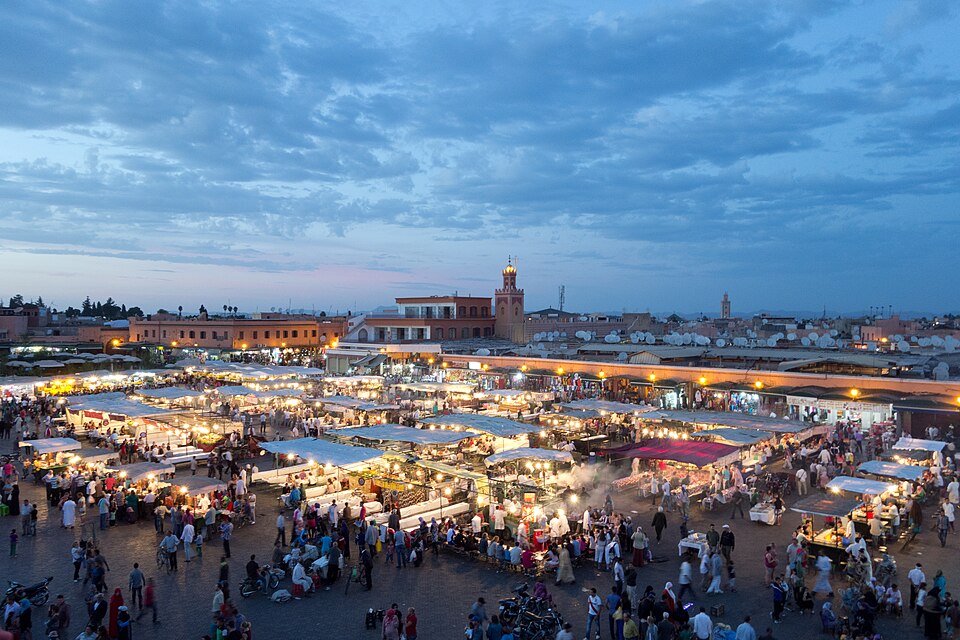
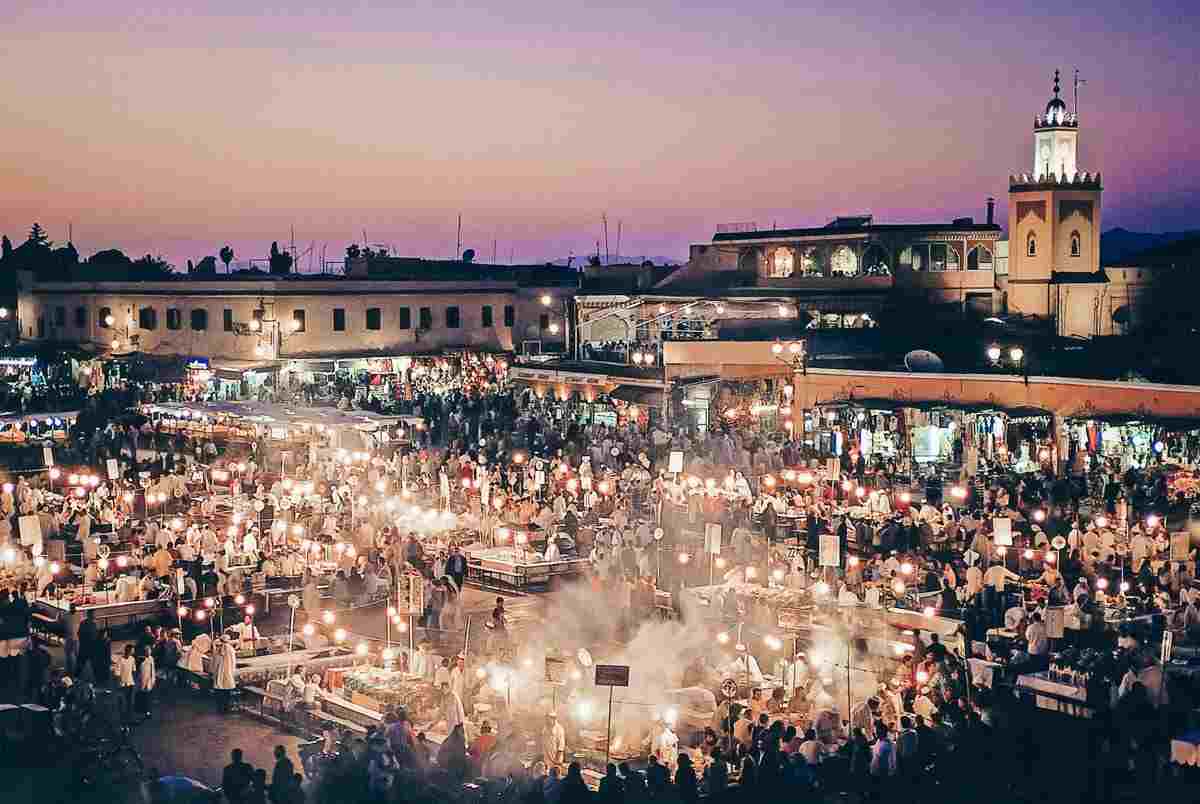
Marrakech is a city that teaches you to look down and around. Its famous medieval Medina is a horizontal labyrinth of mud-brick walls, covered souks, and narrow alleys designed centuries ago to provide shade from the relentless North African sun. For generations, travelers experienced the city exclusively at street level—a sensory immersion defined by the rhythmic shouting of merchants, the scent of burning cedar, and the close-up pulse of local commerce.
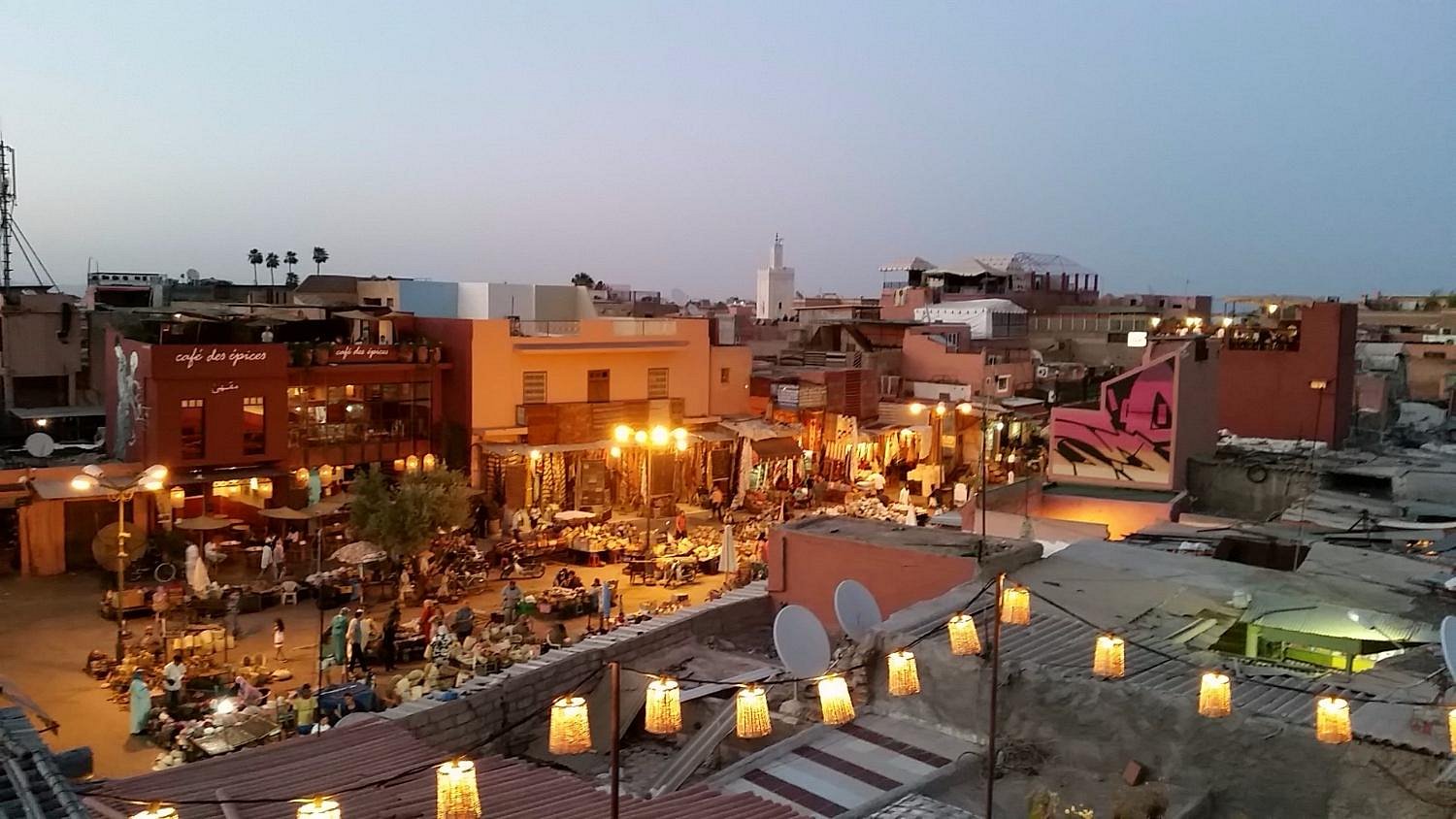
However, true travel evolution requires a change in perspective. When Nomad Marrakech established itself on the historic Rahba Kedima (the Spice Square), it did not just open another dining room; it pioneered a new architectural paradigm for the Red City. By embracing verticality and a radical philosophy of design, Nomad transformed how global travelers engage with the old city, proving that luxury in the 21st century is defined by space, silence, and visual liberation.
The Psychology of Space: From Sensory Overload to Cognitive Reset
Modern environmental psychology highlights the concept of “cognitive fatigue”—the mental exhaustion that occurs when the brain is subjected to relentless, unstructured stimuli. Navigating the Marrakech souks is an exhilarating cultural exercise, but it pushes the human nervous system into a state of hyper-arousal.
Nomad’s spatial strategy acts as a direct counter-narrative to this exhaustion through a three-step sensory journey:
- The Compression Threshold: Entering the building from the bustling spice square mimics traditional Moroccan architecture—a deliberately narrow, unassuming doorway that acts as a psychological airlock, shutting out the immediate chaos of the street.
- The Ascending Transition: As guests move up the staircases, the material palette shifts from street-level grit to clean, tactile surfaces—smooth tadelakt plaster, raw iron, and natural wood.
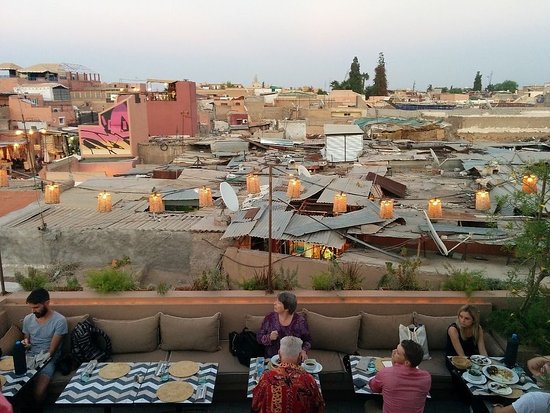
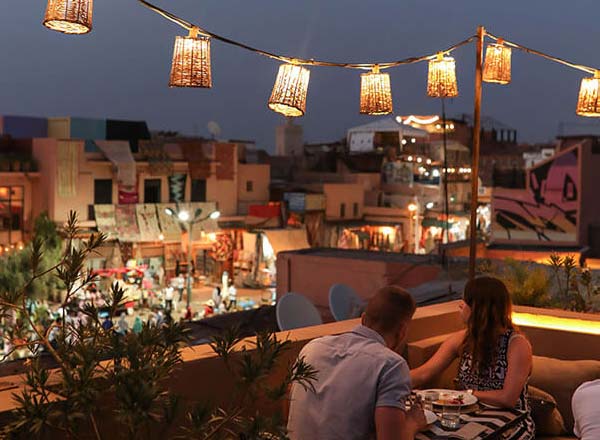
- The Vertical Release: Emerging onto the multi-level terraces provides an immediate psychological “reset.” The human brain, hardwired to seek safety in open horizons, instantly relaxes when presented with an unobstructed view of the distant Atlas Mountains and the endless expanse of terracotta rooftops.
“Nomadic Minimalism”: Stripping Away the Orientalist Cliché
For decades, high-end hospitality in North Africa fell into the trap of over-stylized Orientalism—heavy velvet drapes, gilded arches, and a maximalism that often felt like a Hollywood movie set rather than an authentic expression of Moroccan identity.
Nomad broke this mold by inventing a visual language known as Nomadic Minimalism.
- The Neutral Canvas: By utilizing a color palette inspired by the desert—bone-whites, warm sands, deep charcoals, and muted terracottas—the interior design deliberately steps back.
- Allowing the City to Be the Art: Because the interior is quiet and refined, the vibrant colors of the square below—the rich oranges of turmeric sacks, the deep indigos of Berber carpets, and the bright blue sky—become the restaurant’s shifting, living artwork.
- Functional Craftsmanship: Every physical element, from the hand-woven straw shading panels to the minimalist iron chairs, is custom-designed and sourced from local artisans, proving that traditional craftsmanship can adapt to contemporary global aesthetics without losing its soul.
The Rahba Kedima: Breathing New Life Into a Historic Crossroads
No architecture exists in a vacuum. Nomad’s cultural success is inextricably linked to its geographic home: the Rahba Kedima, historically known as the grain market and, centuries prior, a bustling trading post.
By anchoring itself to this specific square, Nomad helped catalyze an economic and cultural renaissance for the local community. Instead of displacing traditional trades, the restaurant’s presence elevated the neighborhood’s profile, drawing international curators, designers, and thinkers to a square that was once merely a transit point. It transformed a historic trading hub into a modern cultural crossroads where ancient commerce meets contemporary global lifestyle.
Frequently Asked Questions (FAQ)
Q1: Where is Nomad Marrakech located within the city?
A: Nomad is located right in the heart of the ancient Medina at 1 Derb Aarjane, directly overlooking the Rahba Kedima (the Spice Square), just a short walk from Jemaa el-Fnaa.
Q2: Do I need to book a table in advance?
A: Due to its immense popularity for sunset viewings and unique design, booking ahead through the official website at nomadmarrakech.com is strongly recommended, especially for rooftop seating.
Q3: What is “Nomadic Minimalism”?
A: It is a design philosophy pioneered by Nomad that combines clean, modern, minimalist lines and neutral desert tones with authentic, locally sourced Moroccan craftsmanship, creating a calm contrast to traditional maximalist decor.